Taking a break from the news (and what it’s showing me)
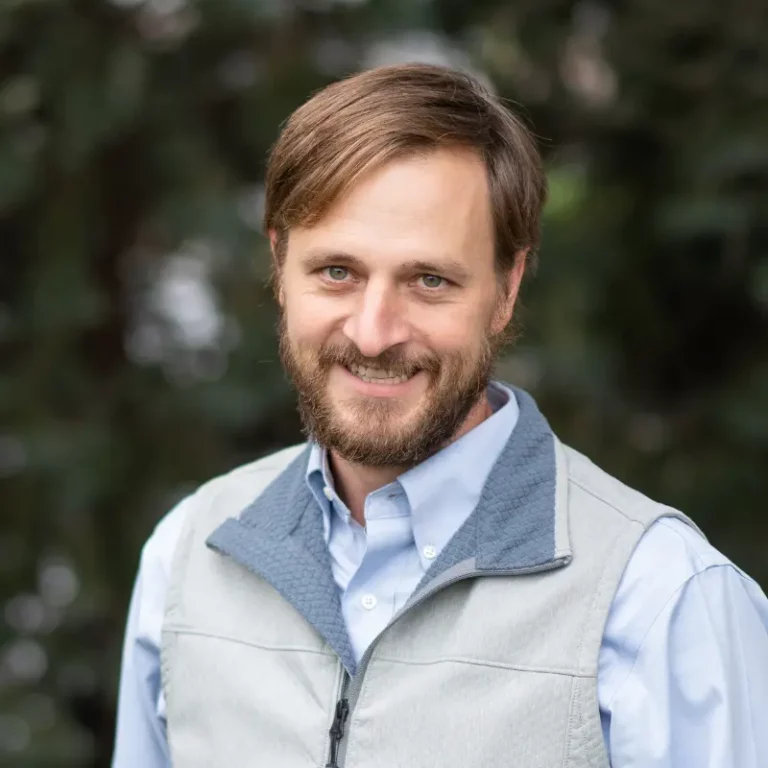
This encouragement is written by Colin Hoogerwerf, the Podcast Producer at BioLogos. BioLogos empowers people to explore, embody, and delight in the harmony of faith and science.
I’m not reading any news right now. The decision has brought a kind of relief — most days I feel less anxious, and I don’t feel removed from what matters around me. But it’s also made me more aware of some tensions I can’t ignore.
The first is that stepping back from the news has shown me how easily it can pull me into patterns of judgment or distance from others, especially those I don’t understand. The news headlines seem to be built around the sowing of division. Each story draws us deeper into our tribe and more incredulous of those outside our tribe. Even telling people that I’m avoiding the news can create tension or conflict. “How can you be informed and take action if you don’t know what’s going on?!” they say with a tone of judgement.
But the more curious tension to me is about the pull of protecting myself from what unsettles me and the cost of turning away from it.
It’s not the first time I’ve had this kind of choice. Even though my education and career are rooted in science communication, especially about climate and environmental science, a few years ago, I found myself in a place where I was just sick of consuming any new information about the environmental crisis. New books, articles and documentaries on climate were coming out at the same pace as ever, and I just couldn’t stomach them. I figured I pretty much knew what it was going to say, and I had a pretty good sense of how that would make me feel.
It would be easy enough for me to describe that time of avoiding new information as a “fast.” But that puts theological language on something that was more psychological. A fast redirects attention. What I was doing didn’t. I was avoiding it for the relief it gave. There was no learning that came from my avoidance.
I can’t remember a moment that anything changed, but it did. It’s not that I just decided to start slowly engaging again either. I looked it straight in the eye. I made it a project. The result was a four-part podcast series I put together as a part of my work with BioLogos called “Creation Groans.” In this series, we ask and wrestle with the question: How should we respond to a problem that seems unsolvable?
When I finally did re-engage, it turned out that I was mostly right about how it would make me feel. The darkness is real. But engaging with it changed my relationship to the darkness. It wasn’t something I was turning my back from. It became less powerful, something I could share with others, rather than having to carry on my own. And more importantly it became formational rather than only looming in the background.
Through that work, I came to a new appreciation of Psalm 126.
4 Restore our fortunes, Lord,
like streams in the Negev.
5 Those who sow with tears
will reap with songs of joy.
6 Those who go out weeping,
carrying seed to sow,
will return with songs of joy,
carrying sheaves with them.
Since the time of the psalmist, and even long before that, people have dealt with suffering, disagreement, and the anxiety of the looming crisis. The wisdom of the psalmist was not to ask for the suffering to be erased (though those pleas surely have a place too) but to work through the suffering. Re-engaging felt like sowing with tears, choosing to carry something heavy instead of turning away from it… and trusting that it might grow into something life-giving.
Where does that bring me now? I haven’t decided to start reading the news. I’m not sure it is the same as my avoidance of climate related information. But what my news avoidance has done for me is to refocus my attention on the world directly in front of me, the people in front of me, within arms reach. But it also has me curious. If that earlier season taught me anything, it’s that some things can only be carried, not avoided. And I’m still learning when that’s true.