
Demanding work requires daily renewal
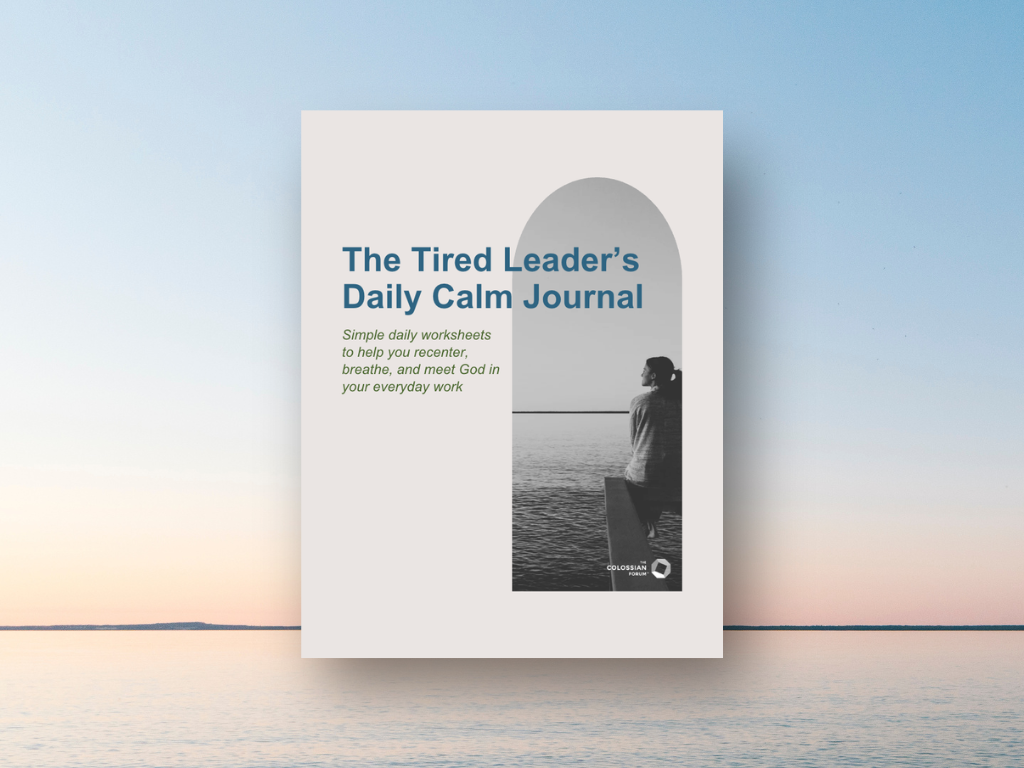
For those carrying a lot of responsibility at work, it’s easy to become exhausted. The Tired Leader’s Daily Calm Journal is a five-day guided journal designed to help you:
- Understand the stress and pressure shaping your reactions
- Discern what’s yours to carry and what you need to release
- Return to God’s presence with greater peace, clarity, and awareness
Each day includes a brief Scripture reflection, prayer, emotional check-in, and guided prompts for praise, lament, and renewal.
Hopeful episodes for leaders facing burnout
On the Practicing Hope podcast, we’re having honest conversations about leadership, conflict, and burnout. These episodes are here to support you and offer hope for leaders navigating high-pressure, emotionally heavy work. You don’t have to figure this out on your own.
-
The Cost of Doing Everything Yourself
What if a fuller life comes not from convenience, but from shared life with others? Tanner Smith and Chase Rashad Stancle examine the value of self-sufficiency and how it shapes our neighborhoods, churches, and relationships. -

Paying Attention to Your Body
What if your body is trying to tell you something important? In this episode, Rev. Dr. Tanner Smith and Pastor Chase Rashad Stancle explore the powerful connection between our bodies, emotions, and spiritual well-being. They discuss how ignoring physical signals can impact leadership, relationships, and mental health.
Turning fear into prayer: a breath prayer practice

Written by Dr. Rebecca Konyndyk DeYoung
Fear has a way of fastening itself to the things we care about most. It tends to gather around what feels meaningful, fragile, or uncertain in our lives — often revealing, if we are willing to notice it, what we are holding most closely.
Begin by choosing a short passage of Scripture where someone brings their fear before God. You might read about Moses hesitating at the burning bush, Mary receiving unexpected news, Elijah exhausted in the wilderness, or Abraham stepping into the unknown. As you read, notice how God responds to them with mercy.
From that place, form a simple breath prayer of your own. Perhaps something like:
“Be my refuge” (inhale) / “Calm my fear” (exhale).
As you breathe, name what you are afraid to lose. Allow the prayer to hold both your fear and your desire to trust. Carry this breath prayer with you throughout the day. Over time, this small rhythm becomes a way of entrusting what you love to God, not all at once, but one breath at a time.
This practice is an excerpt from our email newsletter, Hope in Your Inbox. If you’d like to receive practices like this every other Monday, sign up for the newsletter here.
Conflict brings up a lot of questions. We’re here to help.
How do I know if I’m experiencing burnout?
Not every difficult season is burnout. Every leader experiences periods of fatigue after a busy ministry season, a crisis, or a season of significant change. Burnout is different because it doesn’t lift with a few days off or a lighter week. Instead, you may begin to feel emotionally, physically, or spiritually depleted in ways that make it difficult to lead with the energy, compassion, and sense of calling you once had.
Burnout often shows up gradually. You may notice that you’re more impatient or cynical than you used to be, that criticism affects you more deeply, or that you feel emotionally drained before the day even begins. You might avoid conversations or responsibilities you once enjoyed, struggle to concentrate, find it harder to make sound decisions, or go through the motions in prayer, sermon preparation, or pastoral care.
If you recognize yourself in these patterns, don’t wait until you’re certain it’s burnout to seek support. Ministry leaders often spend so much time caring for others that they overlook their own well-being or assume they’ll address it later. Talk with someone you trust, whether that’s a mentor, spiritual director, counselor, or healthcare provider. Take an honest look at your rhythms of work and rest, and ask where you may need additional support or healthier boundaries. Burnout is often easier to address early than after you’ve reached a point of crisis.
Want to go deeper? Explore the resources on this page for practical guidance on recognizing burnout, rebuilding healthier rhythms, and leading sustainably. If you’re looking for simple practices to cultivate rest and renewal, our Slowing Down Guide is a great place to start.
Why do I feel guilty when I rest?
Leaders often carry responsibilities that don’t fit neatly into office hours. You may hesitate to take a day off because your team is already stretched thin. You answer emails late at night because you know someone is waiting on you. Even when you do step away, you’re thinking about the conversation you still need to have, the decision you haven’t made, or the person who still needs your help. Over time, it’s easy for that sense of responsibility to become a feeling that you should always be available.
Sometimes that guilt comes from expectations you’ve placed on yourself. Other times, it’s reinforced by the people or cultures around you. Ministry leaders are often praised for being constantly available, self-sacrificing, and willing to put others’ needs first. While those qualities can reflect deep love and commitment, they can also make it difficult to recognize when responsibility has become unhealthy. God created us with limits, and God also invites us into rhythms of rest that remind us we are human beings, not saviors. Rest is one of the ways God forms us to trust him and receive his care.
The next time you feel guilty for resting, pause and ask yourself what’s driving that feeling. Are you responding to a genuine responsibility, or to an expectation that may no longer be serving you or those you lead? What would it look like to receive rest as part of your calling, rather than a distraction from it? As you make space to step away, you may discover that trusting God with what remains undone is part of faithful leadership, too.
Want to go deeper? Explore the resources on this page to learn more about building healthy rhythms for sustainable leadership. If you’re looking for practical ways to slow down and reconnect with God’s presence, our Slowing Down Guide offers simple practices to help you begin.
How do I support my team when morale is low and the demands won’t let up?
Low morale isn’t always a sign that people have lost their commitment to the work. Often, it’s the result of carrying too much for too long. When every task feels urgent and every challenge demands attention, even highly committed teams can begin to feel overwhelmed.
You may not be able to remove every pressure your team is facing, and that’s okay. Ministry leaders aren’t responsible for fixing every challenge or making difficult seasons disappear. What you can do is create a culture where people can name reality honestly, support one another, and remember they’re not carrying the burden alone. Regularly ask your team how they’re doing, listen without rushing to solve every problem, and acknowledge the challenges you’re facing together. Honest conversations build trust, even when circumstances don’t immediately improve.
When opportunities do exist to ease the load, help your team focus on what matters most. Clarify priorities, look for responsibilities that can be postponed or simplified, and give people permission to let go of work that isn’t essential. Supporting your team doesn’t always mean asking them to do more. Sometimes it means protecting their capacity to do the most important work well.
Just as important, make celebration part of your team’s culture. Create intentional moments to recognize God’s faithfulness and celebrate wins, both big and small. That might mean sharing words of affirmation during a team meeting, pausing to acknowledge meaningful milestones, or gathering for a simple staff lunch. These practices won’t remove the demands of ministry, but they can remind your team that their work matters and that they are seen, appreciated, and not alone.
Finally, remember that your team will often take their cues from you. When you acknowledge your own limits, protect time for rest, and resist the pressure to push through at all costs, you help create a culture where healthier rhythms become possible for everyone.
Want to go deeper? Explore the resources on this page for practical guidance on supporting healthy leadership and preventing burnout. If you’re looking for simple ways to foster renewal for yourself and your team, our Daily Calm Journal offers brief practices that can help cultivate reflection, resilience, and sustainable rhythms.
What habits help ministry leaders stay healthy for the long term?
One important habit is paying attention to yourself with the same care you give to others. Notice when you’re becoming more impatient than usual, when small frustrations begin to feel overwhelming, or when you’re consistently running on empty. Those are often early signs that you need rest, support, or a different pace.
Another habit is regularly asking yourself, “What has God entrusted to me, and what has God entrusted to others?” Leadership often creates the feeling that every problem belongs to us. That question reminds us that God works through communities, not just individuals. Look for opportunities to delegate responsibilities, simplify commitments, or postpone work that isn’t essential. Put your working hours on your calendar, protect them whenever possible, and let your team know when you’re stepping away to rest. Encourage others to do the same, and honor those boundaries when they do.
Just as important, don’t try to lead alone. Set aside regular time—whether monthly or every few weeks—to meet with a trusted mentor, coach, spiritual director, or colleague who can help you notice patterns you might miss on your own. Invite someone you trust to ask how you’re really doing. Others often recognize unhealthy rhythms before we do, and honest conversations can help us receive support before a difficult season becomes a crisis.
Finally, make space to remember that your identity is rooted in Christ before it is rooted in your role. Prayer, Scripture, worship, and Christian community aren’t simply habits that help us become better leaders. They are practices through which God forms us, reminding us who we are, whose we are, and who ultimately carries the work. Returning to these rhythms can renew our perspective and help us lead with greater humility, wisdom, and trust.
Want to go deeper? The Practicing Hope Podcast offers honest conversations about leadership, conflict, and burnout. These episodes are especially helpful for leaders navigating high-pressure, emotionally demanding work:
Can I recover from burnout without leaving ministry?
Burnout can cloud your perspective, making it difficult to tell the difference between “I’m no longer called to this work” and “I’m exhausted from carrying it this way.” Before making a major decision about your future, it can be helpful to first acknowledge the burnout itself and begin receiving the care and support you need.
Burnout doesn’t necessarily mean your calling has changed. It may mean something about the way you’ve been navigating that calling needs to change. For some leaders, that means setting healthier boundaries, sharing responsibilities, or taking time for rest and recovery. For others, it may involve stepping away from a role for a season while they heal. Every situation is different, and faithful discernment often takes time.
If you’re wrestling with whether to stay or leave, don’t carry that question alone. Invite trusted people into the conversation, whether that’s a mentor, spiritual director, counselor, supervisor, or close friend who knows you well. Pray honestly, listen for God’s guidance, and give yourself permission to discern your next step without feeling pressured to have all the answers right away.
Want to go deeper? Our blog, The Latest, features reflections from our team and guest contributors serving in a variety of ministry contexts. You’ll find thoughtful perspectives on burnout, discernment, and faithful leadership. We especially recommend “Finding My Place in a Changing Church“ by Spiritual Director Margot Eyring, which explores what it means to wrestle with belonging while remaining open to God’s leading.
Build resilience for the pressures of leadership
Leadership can be deeply meaningful and demanding. Over time, responsibility, conflict, and change can take a toll on leaders and teams.
Our workshops help Christian leaders recognize what happens within them under pressure and develop practices for leading with greater resilience, healthy limits, and connection to God and others.
Some of our most requested workshops include:
- Cultivating Resilience — helping leaders remain calm, clear, and connected under pressure.
- Beholding — discovering hope and faithful next steps in difficult relationships.
- One Anothering — cultivating curiosity and love across political differences.
Whether you’re planning a retreat, professional development, or looking for deeper support for your team, we’d love to help you discern what would serve your organization best.


When leadership feels heavy
Subscribe to our newsletter, Hope in Your Inbox, for encouragement, practices, and insight to help you navigate pastoral burnout, leadership fatigue, and relational tension.