
Most of us have at least one relationship that ties us into emotional knots
When relationships get hard, many of us tell ourselves a story about the other person: They always do this. They’ll never change. There’s no point in trying.
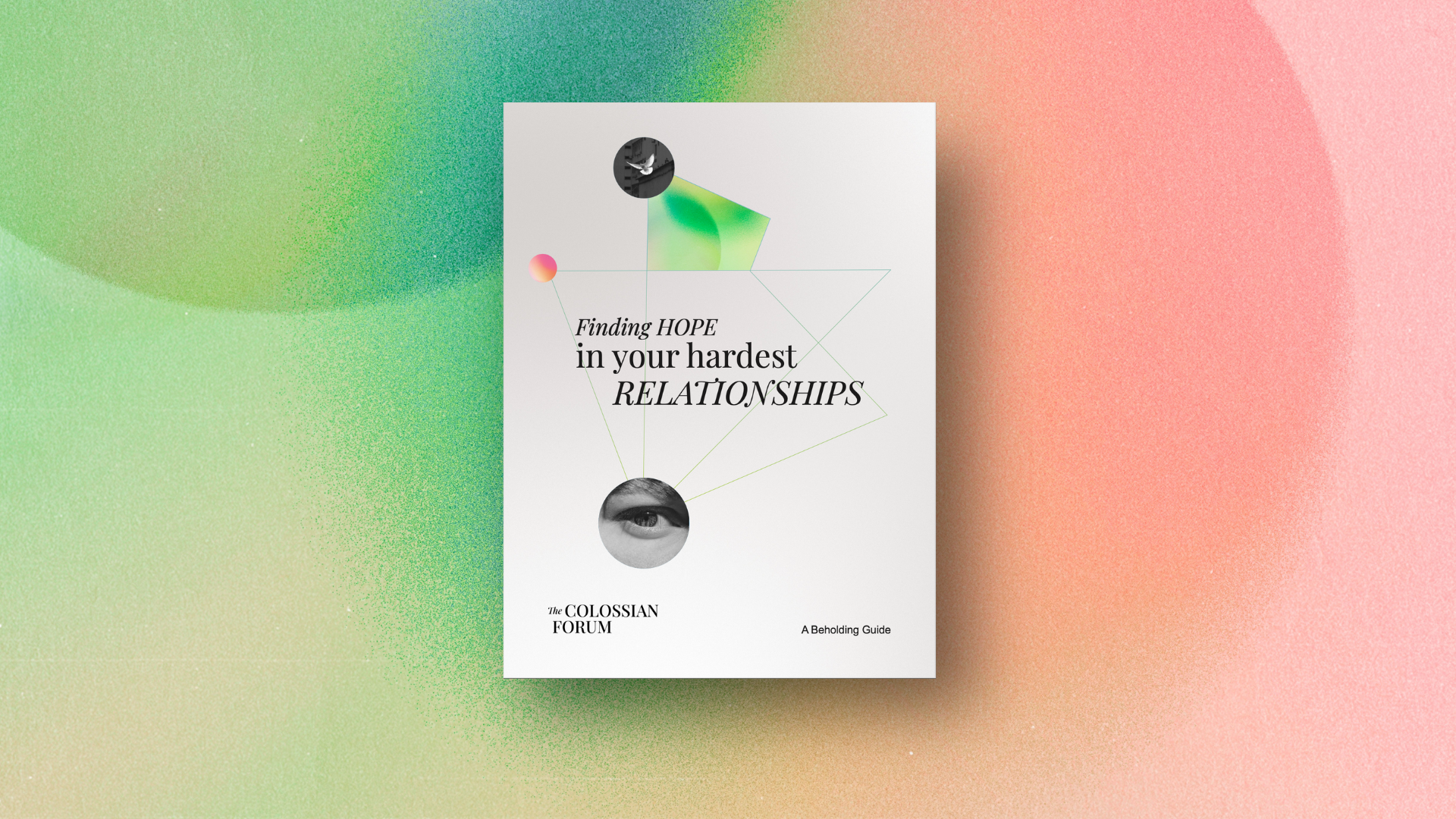
The Beholding Workbook is a 56-page guide designed to help you practice beholding — an attentive, loving way of noticing another person — in one specific relationship.
- Cultivate renewed hope for exhausting relationships
- Move beyond reactive patterns in tense conversations
- Learn practical ways to approach conflict with curiosity and wisdom
Micro-connections: small actions to stay engaged
Family tension can make it tempting to pull away, shut down, avoid certain conversations, or keep interactions as brief as possible. But staying connected doesn’t always require fixing the relationship or resolving the conflict. Sometimes faithfulness begins with one small act of presence, care, or openness that helps keep the relationship from disappearing entirely.
Choose one small way to stay engaged.
Think of one family relationship or situation where you feel distance, tension, or exhaustion. Then choose one micro-connection you can practice this week:
- Make eye contact and warmly greet someone you normally avoid.
- Send a brief message that says, “Thinking about you today.”
- Stay present in a conversation instead of withdrawing or shutting down.
- Ask one honest, curious question without trying to correct or convince.
- Offer a small act of care — helping with something practical, checking in, or making space for someone else.
This practice is from a newsletter article written by Mary Hulst called, “The early church was a mess. Maybe there’s hope for us yet?” Sign up for our newsletter to receive more hopeful practices.
Conversations for navigating conflict at home
On the Practicing Hope podcast, we don’t shy away from difficult family dynamics and the ways conflict at home can shape our lives, identities, and relationships. These conversations offer practical wisdom, honest encouragement, and hopeful next steps for interrupting unhealthy patterns, staying connected when things feel strained, and learning new ways of showing up with the people you love.
-
Going Toward in Difficult Relationships
What if the difficult people in your life are also your greatest teachers? In this episode, Pastor Chase Rashad Stancle and Rev. Dr. Tanner Smith take an honest, hopeful look at what it means to lead in the midst of hard relationships. Instead of giving a formula to fix “those people,” they turn the focus inward, offering wisdom and practical tools to help leaders respond with love, boundaries, and self-awareness. -
How Not to Lose Yourself in Conflict
In this honest and hope-filled episode of Practicing Hope, Rev. Tanner Smith and Pastor Chase Rashad Stancle explore what it means to be a defined leader: someone who knows their values, shows up with clarity, and doesn’t disappear in the heat of conflict. -
You Don’t Have to Fix It: Loving People in Pain
Have you ever had someone trust you with something heavy, and suddenly you're not sure what to say? In this episode, hosts Tanner Smith and Sarah Johnson are joined by Holly Wilson from Safe Haven Ministries to talk about what trustworthiness looks like in real relationships, especially when someone shares a painful story.
A free guide to help you stay grounded in tension
Hard conversations can make us reactionary. In the moment, we push, shut down, over-explain, or stay silent, and only later realize we didn’t show up the way we hoped.
But there is a way to stay grounded in the heat of tension, to respond with love, remain connected, and act with greater clarity.
The Staying Grounded Guide is a free resource that offers simple practices to help you notice your patterns, reconnect with God’s presence, and choose a more faithful response in tension.

Conflict brings up a lot of questions. We’re here to help.
What should I do when someone brings me into a conflict that isn't mine?
It happens more often than we realize. A sibling vents about another sibling. Your adult child complains about their spouse. A parent asks you to take sides in a disagreement. Before long, you’ve been pulled into a conflict that didn’t begin with you.
Family relationships are shaped by deep history, strong emotions, and a desire to care for one another. It’s one reason it’s so easy to get drawn into conflicts that aren’t ours to resolve. In moments like these, someone is often looking for relief from the tension they’re carrying. Bringing a third person into the conversation can temporarily bring relief or help them feel understood. Sometimes that’s healthy. A trusted friend, pastor, or mentor can offer wisdom and perspective that helps move a relationship toward healing. But sometimes bringing someone else in simply delays the conversation that needs to happen and spreads the anxiety to another person. This common pattern is what we call a relational triangle.
When you realize you’ve been pulled into someone else’s conflict, resist the urge to immediately fix the problem or take sides. Instead, pause and ask, “What is my responsibility here?” Often, the most helpful thing you can do is create space for reflection rather than offering solutions.
You might ask the other person questions like:
- Have you been able to share this with them?
- What do you think they might be experiencing?
- How could I help you prepare for that conversation?
This can be especially difficult when the person coming to you is someone you deeply love. If this becomes a pattern, you don’t have to carry a conflict that isn’t yours. Instead, gently ask, “Have you thought about talking with them about that?” It’s a simple way to redirect the conversation without rejecting the person. Rather than solving the conflict for someone else, you’re helping them move toward the relationship that has the greatest potential for healing.
Want to go deeper? Listen to our four-part Practicing Hope: Relational Triangles podcast series to learn how to recognize the different roles we tend to play in conflict, understand why we get stuck, and practice navigating difficult relationships with greater emotional maturity and agency.
How can I prepare for a difficult family gathering?
For some, spending time with family brings up all kinds of difficult dynamics. Whether you’re anticipating unresolved conflict, grieving someone who won’t be there, or simply feeling anxious about how everyone will get along, it’s easy to spend more time preparing what you’ll bring than making space to pray and reflect beforehand. Taking time to do so won’t guarantee everything goes smoothly, but it can help you be present with your family without losing yourself.
You can’t control what happens once everyone is together. But you can prepare in ways that shape how you show up, helping you stay attentive to God, love your family well, and respond thoughtfully when tensions arise.
Start by naming what’s real. What are you carrying into the day? Perhaps you’re feeling hurt, disappointed, fearful, or exhausted. Bring those feelings honestly before God. At the same time, don’t let imagined conversations or worst-case scenarios become the only story you expect. While difficult moments may come, God may also surprise you with opportunities for connection, healing, or grace.
Next, ask yourself: What am I hoping for? Rather than focusing on how someone else needs to change, name one hope that’s within your reach. Maybe you hope to have one meaningful conversation, offer encouragement to a family member, or simply be more present than you were last time. Then ask another question: What might God want for me today? Those questions can help you respond thoughtfully instead of reacting out of familiar patterns, even if things don’t unfold the way you hoped.
If things become difficult, it’s okay to take small breaks. Not to withdraw or avoid, but to take a breath, regulate your body, and remember there’s more going on than just the conflict you’re facing. Look for a simple way to serve someone else. Helping in the kitchen, playing with the kids, or checking in on someone who seems alone can interrupt anxious patterns and remind you that everyone is carrying something. Even with thoughtful preparation, the day may still be really hard. These practices aren’t meant to fix the dynamics. They’re meant to help you become more aware of your own emotions, more attentive to God’s presence, and more open to what he may be doing in you and your family.
Want to go deeper? If one particular relationship feels especially difficult, the Beholding Workbook offers guided Scripture reflections and practices to help you see that person through the love of Christ. You can also subscribe to Hope in Your Inbox to receive regular encouragement and practical practices for navigating conflict in everyday life.
What does forgiveness look like when nothing has changed?
When someone continues to hurt you, forgiveness can feel impossible. You may wonder if forgiving means pretending the pain didn’t matter, ignoring unhealthy patterns, or opening yourself up to be hurt again. If that’s been your experience, you’re not alone.
The good news is that forgiveness doesn’t require you to deny what’s happened. Instead, it invites you to face it honestly with God. That means acknowledging what’s been lost, grieving the hurt, and entrusting to God what you cannot fix on your own. Sometimes forgiveness begins even when the relationship itself hasn’t changed.
If you’re struggling to forgive, start by asking yourself a few simple questions. What has this relationship cost me? What am I grieving? What am I still trying to control? Bring those questions honestly before God, and don’t carry them alone. Invite a trusted friend, spiritual director, pastor, mentor, or counselor into the conversation. They can help you discern what forgiveness looks like, whether the relationship is moving toward repair, and how to respond wisely if it isn’t.
As you pray and seek wise counsel, you may discover that forgiveness and reconciliation are not the same thing. You can forgive someone without pretending trust has been restored or the relationship is ready to return to what it was before. Repair takes honesty, changed patterns, and the willingness of both people to participate.
Forgiveness is rarely a one-time decision. It’s a practice of returning to God again and again with what’s still unresolved. Even if the other person never changes, forgiveness can free you from carrying resentment alone while remaining open to God’s work in you.
Want to go deeper? For a deeper exploration of forgiveness and healing, read our blog post on this topic in The Latest. If there’s one particular relationship you’re struggling with, the Beholding Workbook offers guided Scripture reflections and practices to help you see that person through the love of Christ.
How do I stay in relationship with a family member I deeply disagree with?
When someone you love sees the world very differently than you do, the disagreement can start to feel like a threat to the relationship itself. Conversations become tense. You may find yourself avoiding certain topics or avoiding each other altogether. Sometimes it even feels as though you’re being asked to choose between your convictions and the relationship.
While you can’t control how another person responds to you, you can pay attention to how you’re showing up. We all have default reactions when conflict feels threatening. Some of us become louder and more determined to make our point. Others shut down, withdraw, or avoid the conversation altogether. Learning to recognize those patterns gives us the opportunity to interrupt them and respond differently. If you tend to shut down, try asking one more question. If you tend to dominate the conversation, try listening a little longer before offering your perspective.
It’s easy for every interaction to become about the disagreement. But relationships are built through thousands of small moments, not just difficult conversations. Sometimes moving toward someone looks like listening a little longer, asking one more curious question, or simply enjoying time together without trying to settle your biggest disagreement.
Relationships also go through seasons. Sometimes moving toward someone means having an honest conversation. Other times it looks much simpler: checking in with a phone call, showing up for a birthday, bringing a meal after surgery, asking about their life, or sharing a meal together. These small acts of love won’t erase your differences, but they remind both of you that your relationship is bigger than the disagreement.
You can’t control how someone else responds. They may still pull away, and that can be a real loss. While you can’t choose for them, you can choose how you show up. As you entrust the relationship to God, he can continue to shape you and work in ways you may not yet be able to see.
Want to go deeper? The Beholding Guide helps individuals and groups practice seeing someone who’s difficult to love through the love of Christ. And if you’re looking for practical help navigating political or other deeply held differences, One Anothering is an eight-week guide for small groups or individuals that helps people learn how to have hard conversations while remaining rooted in Christ and connected to one another.
How do I know when to speak up and when to let it go?
When someone you love says or does something hurtful, it can be hard to know what love requires. If you speak up, you might make things worse. If you stay quiet, resentment can grow. There is no formula for getting it right every time, but there are practices that can help you respond with wisdom instead of reacting in the moment.
Before deciding whether to have a difficult conversation, take time to examine your own heart. Ask yourself, Am I motivated by care for this person and our relationship, or am I mostly reacting out of frustration, fear, or the need to relieve my own anxiety? What am I hoping the conversation will accomplish? Bringing those emotions honestly before God can help you respond from a place of love instead of reactivity.
If the conversation feels especially weighty, try writing down what you want to say before you say it. The process of putting your thoughts on paper can help you clarify what is actually true, what assumptions you’ve made, and what you hope the conversation will accomplish. It can also help you slow down enough to consider how your words might be received.
It can also help to separate what you know from the story you’re telling yourself. We naturally make assumptions about why people say or do certain things, but our assumptions are not always accurate. Before you decide you know what someone meant, try asking one curious question. “Can you help me understand what you meant?” or “Can you tell me more about what was going through your mind?” You may discover there is more to the story than you realized.
Finally, consider whether you’re responding to a pattern or a single moment. Everyone has bad days. But if you’ve noticed the same hurtful behavior over time, or if it continues to harm your relationship, it may be time for an honest conversation. If it is an isolated incident, wisdom may look like extending grace while continuing to pay attention.
You will not always know whether you chose the perfect moment to speak. But as you continue to seek God’s wisdom, he can help you grow in discernment, giving you the courage to speak when love calls for it and the patience to wait when it does not.
Want to go deeper? The Beholding Guide helps individuals and groups practice seeing someone who is difficult to love through the love of Christ. You can also listen to the Practicing Hope podcast episode, “Should I Say Something? Discerning When to Speak Hard Truths,” part of our Discernment series, for a deeper conversation about how to recognize your motivations, discern when to speak, and respond with wisdom and grace.

Hope for difficult relationships
Subscribe to Hope in Your Inbox for encouragement, practices, prayers, and honest reflections to help you navigate family tension, difficult relationships, and painful conversations with wisdom, compassion, and hope.