
A free guide for staying grounded in tension
Hard conversations can make us reactionary. In the moment, we push, shut down, over-explain, or stay silent, and only later realize we didn’t show up the way we hoped.
But there is a way to stay grounded in the heat of tension, to respond with love, remain connected, and act with greater clarity.
The Staying Grounded guide is a free resource that offers simple practices to help you notice your patterns, reconnect with God’s presence, and choose a more faithful response in tension.

Understanding relational triangles in the workplace
This 4-part Practicing Hope podcast series explores the hidden relational dynamics that shape workplace conflict — especially the familiar roles of victim, accuser, and rescuer that teams often fall into under stress. As you listen, you’ll be invited to consider your own patterns, recognize unhealthy dynamics more clearly, and discover more grounded ways of responding to tension and conflict.
-
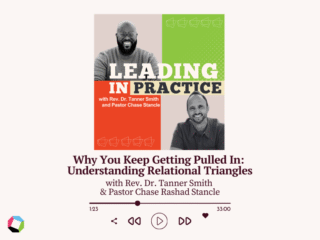
Why You Keep Getting Pulled in: Understanding Relational Triangles
In this hope-filled episode of Leading in Practice, hosts Tanner Smith and Chase Rashad Stancle explore the hidden dynamics of relational triangles. They share stories from pastoral life, practical strategies to “flatten the triangle,” and ways to discern when you’re moving toward connection or just lowering discomfort. -
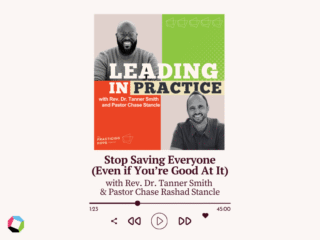
Stop Saving Everyone (Even if You’re Good At It)
Have you ever felt the pressure to fix everyone else’s problems? In Part 2 of our Relational Triangles series, hosts Tanner Smith and Chase Rashad Stancle — joined by Sarah Johnson — unpack the “hero/rescuer” role of the Drama Triangle: why anxious systems reward over-functioning and how to shift from rescuer to coach with simple, wise questions.
Listening to learn vs. listening to defend: a practice for tense office dynamics
In your next tense conversation, enter with one commitment: listen to learn, not to defend. When we listen to defend, we begin preparing our response while the other person is still speaking, and our attention narrows to protecting a position. But when we listen to learn, our posture shifts — we become more present, more curious, and more open to creative possibilities we could not see alone.
When tension rises in a group conversation, choose one concrete action:
- If you tend to speak quickly: Take five full breaths before your first response.
- If you tend to stay quiet: Ask one sincere clarifying question before the conversation ends.
Do not aim to resolve the issue. Aim to remain attentive and connected rather, trusting that the Holy Spirit is at work in the room.
This practice is an excerpt from our email newsletter, Hope in Your Inbox. If you’d like to receive practices like this every other Monday, sign up for the newsletter here.
Conflict brings up a lot of questions. We’re here to help.
Is it wrong to avoid certain conversations just to keep the peace?
Many people avoid difficult conversations because the stakes feel high. They don’t want to damage trust, make an already awkward situation worse, or say something they’ll regret. In the workplace, those concerns can feel even more complicated because you’ll likely continue working with that person.
Not every frustration needs to become a difficult conversation. Some issues can be released with grace, while others need to be addressed for a relationship or team to remain healthy. Sometimes the clearest sign isn’t the conflict itself but what happens afterward. If you find yourself replaying the situation in your mind, avoiding opportunities to work together, or feeling anxious every time you interact with that person, it may be worth asking whether the conversation still needs to happen. Can you genuinely let this go, or does it keep affecting the way you think about or interact with that person?
If you believe the conversation needs to happen, start with one manageable step. Some people find it helpful to write down what they want to say before meeting with the other person. Others talk it through with a trusted mentor or spend time praying before the conversation. The goal isn’t to find the perfect words. It’s to enter the conversation ready to listen, ask honest questions, and stay curious about the other person’s perspective, even when you disagree.
If you’ve been avoiding the conversation for weeks or even months, don’t assume it’s too late. While unresolved conflict can become more complicated over time, one thoughtful conversation can begin rebuilding trust and open the door to a healthier way of working together.
Want to go deeper? Explore our Workplace Conflict resources for practices and reflections to help you navigate disagreement. If you’re looking to better understand your emotional responses before entering a difficult conversation, our Staying Grounded Guide offers practical tools for recognizing reactivity patterns and responding with greater wisdom.
How do I handle ongoing tension with a coworker when we can’t seem to resolve the conflict?
When you can’t seem to move past tension with a coworker, it’s natural to focus on what you wish they would do differently. While we can’t control someone else’s choices, we can pay attention to our own. Ask yourself what patterns keep showing up. How do you typically respond when you feel criticized, misunderstood, or disappointed? Are there assumptions you’re making about the other person’s intentions? Understanding your own reactions can help you recognize habits that make it harder to move toward understanding.
If you’ve already had several conversations and still feel stuck, you don’t have to navigate it alone. Invite a trusted mentor, coach, or colleague to help you discern what you may not be able to see on your own. Instead of asking them to simply confirm your perspective, ask them to challenge you. What patterns do they notice in how you respond to conflict? Where might you be contributing to the tension without realizing it? Honest feedback from someone who knows you well can help you grow, even when the relationship itself remains difficult.
Not every conflict is resolved quickly, and some relationships take a long time to heal. Faithfulness doesn’t always mean finding immediate agreement. Sometimes it means continuing to show up with honesty, respect, and a willingness to keep the relationship from hardening into resentment. That may look like asking a clarifying question instead of assuming someone’s motives, following through on your commitments, or checking in after a difficult meeting instead of avoiding one another. Small, consistent acts of faithfulness can begin rebuilding trust over time.
Even if the relationship never becomes easy, growth is still possible. God often forms us through the slow work of practicing humility, extending grace, and remaining open to what he wants to teach us in the middle of unresolved tension.
Want to go deeper? Explore our Relational Triangles podcast series for practical guidance on navigating difficult relationships, recognizing unhealthy relational patterns, and cultivating healthier ways of engaging conflict.
How do I refuse gossip without dismissing someone's concerns?
It can be hard to know what to do when a coworker starts venting about someone else. Maybe they ask, “Can I get your opinion?” Before you realize it, you’re in the middle of a conflict that isn’t yours. You want to be supportive, but you don’t want to fuel the disagreement.
A good question to ask is, Where is this conversation leading? Sometimes people need wisdom before having a difficult conversation. Other times, they’re looking for validation or someone to take their side. Don’t let yourself become a substitute for the conversation that needs to happen.
Listen with compassion without assuming one person is right. You can say, “That sounds really frustrating,” without saying, “You’re right.” Then ask questions like, “Have you talked with them about this?” or “What would it look like to have that conversation?” If they’re nervous, help them think through how to begin.
Of course, some situations require involving others. Harassment, discrimination, abuse, or unethical behavior should be reported through the appropriate channels. Seeking wise counsel before a difficult conversation can also be healthy. The difference is this: involve others to help move the conflict toward resolution, not simply to reinforce one side.
Scripture calls us to speak the truth in love. Sometimes the most loving response isn’t agreeing with someone’s complaint. It’s helping them find the courage to speak honestly and graciously with the person involved. That’s how we build workplaces marked by trust, courage, and reconciliation.
Want to go deeper? Explore our Relational Triangles podcast series to learn how conflict often draws others into unhealthy patterns, and download the free Staying Grounded Guide for practical ways to remain steady, curious, and connected when tensions rise.
How do I give hard feedback in a way that builds trust instead of breaking it?
We all have default ways of approaching difficult conversations. Some of us hesitate to speak because we don’t want to hurt someone or damage the relationship. Others speak quickly and directly, assuming honesty is always the most helpful approach. Faithful feedback often means growing beyond our natural instincts.
Before starting the conversation, give yourself time to settle your emotions. If you’re feeling frustrated or defensive, it’s easy for feedback to become more about releasing your emotions than helping the other person grow. Ask yourself what you’re hoping the conversation will accomplish. If you tend to avoid feedback, are you protecting the relationship or simply avoiding discomfort? If you’re naturally direct, have you taken time to understand the other person’s perspective before sharing your own? Have you asked enough questions to understand why they made the decision they did?
When it’s time to talk, remember that how you give feedback matters just as much as what you say. If you’re in a position of leadership, recognize that your words carry added weight. A manager’s casual comment can be received very differently than it was intended, so speak with clarity, humility, and care. Be specific about what you’ve observed instead of making assumptions about someone’s motives. For example, “I’ve noticed we’ve missed the last two project deadlines. Can you help me understand what’s getting in the way?” invites conversation more than, “You’re just not reliable.” And whenever possible, talk to the person before talking about the person. Honest, direct conversations build trust. Hallway conversations and gossip slowly erode it.
The conversation doesn’t end when the feedback is over. Building trust also means paying attention to what happens next. Notice and acknowledge growth when you see it. Follow up after a difficult conversation. Continue treating the other person with respect rather than letting the relationship become defined by one hard moment. When people experience both honest feedback and genuine encouragement, they’re more likely to trust that your goal is their growth, not your criticism.
Giving and receiving feedback is one of the ways healthy teams grow. God often uses these conversations to shape us into people who speak truth with humility, receive correction with openness, and help one another flourish in the work he has given us.
Want to go deeper? Read Jess Shults’ article, “Clarity Is Kindness,“ on our blog, The Latest, for practical insights on creating a workplace culture where honest feedback strengthens trust and helps teams flourish.
How do I work with someone who has a completely different communication style than me?
Working with someone who communicates differently can be frustrating. One person may prefer direct, candid conversations, while another needs time to think before responding. These differences become problems when we start interpreting them as signs that someone is rude, disengaged, or difficult.
When a coworker’s communication frustrates you, pay attention to the story you’re telling yourself. Are you assuming a brief email means they’re angry? Are you interpreting their questions as resistance rather than curiosity? Before settling on an explanation, get curious. Ask a clarifying question and give them the opportunity to explain what they intended. Then ask yourself, What gift might this person’s different perspective bring to our shared work?
Rather than expecting the other person to communicate like you, learn what helps them communicate well and share what helps you. Don’t assume they’ll know what you need. Talk about whether you’d rather receive feedback privately, have meeting questions in advance, or process decisions before responding. Small adjustments like these communicate, “I value working well with you.”
Working across communication differences requires both people to stretch. A direct communicator may need to slow down. Someone who needs more time may need to communicate that clearly. The goal isn’t perfect compatibility, but a shared willingness to understand one another. Even if the other person doesn’t meet you halfway, you can still choose to listen well, speak clearly, and treat them with respect.
Every person on your team bears the image of God, including the coworker whose communication style stretches your patience. Rather than seeing those differences as obstacles, we can receive them as opportunities to grow in humility, curiosity, and love. As we do, we create room for stronger relationships and healthier teams.
Want to go deeper? If you’re struggling to see a difficult coworker with fresh eyes, the Beholding Workbook offers guided Scripture, reflection, and practical exercises to help you practice seeing others through the attentive love of Christ.
Equip your team to navigate workplace conflict well
Conflict is part of working with other people. Differences in communication, expectations, priorities, and perspectives can strain relationships and make it harder for teams to work together well.
Our workshops help Christian leaders and teams understand what happens within them during conflict and practice ways of responding that strengthen relationships, build trust, and reflect Christ under pressure.
Some of our most requested workshops include:
- Cultivating Resilience — helping leaders remain calm, clear, and connected under pressure.
- Beholding — discovering hope and faithful next steps in difficult relationships.
- One Anothering — cultivating curiosity and love across political differences.
Whether you’re navigating tension on your team, planning professional development, or investing in a healthier workplace culture, we’d love to help you discern what would serve your organization best.


We'd love to keep encouraging you
Subscribe to our newsletter, Hope in Your Inbox, for encouragement, practices, and insight to help you navigate workplace tension and difficult team dynamics with greater clarity and wisdom.