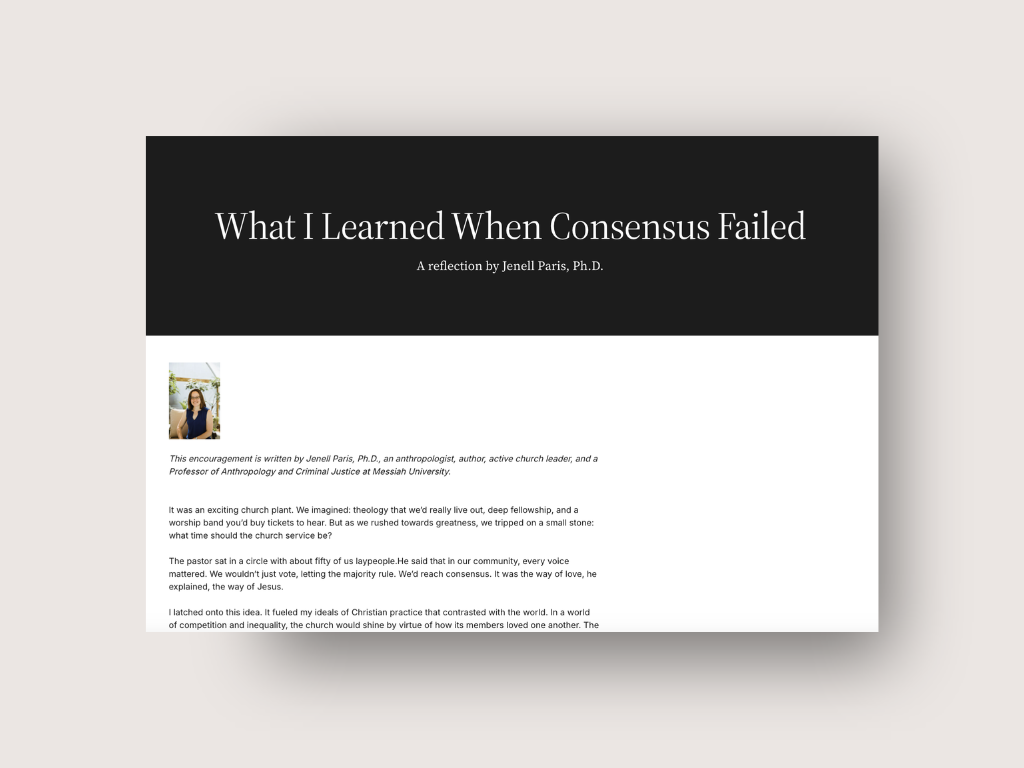
How one church built a culture of creativity through failure
When disagreement surfaces in church communities, it can be tempting to avoid risk or cling tightly to getting everything “right.”
In this blog article, anthropologist and church leader Jenell Paris reflects on a painful moment of conflict in a church plant and what it taught her community about leadership, failure, and trust.
Her story offers hopeful insight for churches trying to navigate disagreement without fear, shame, or losing sight of one another.
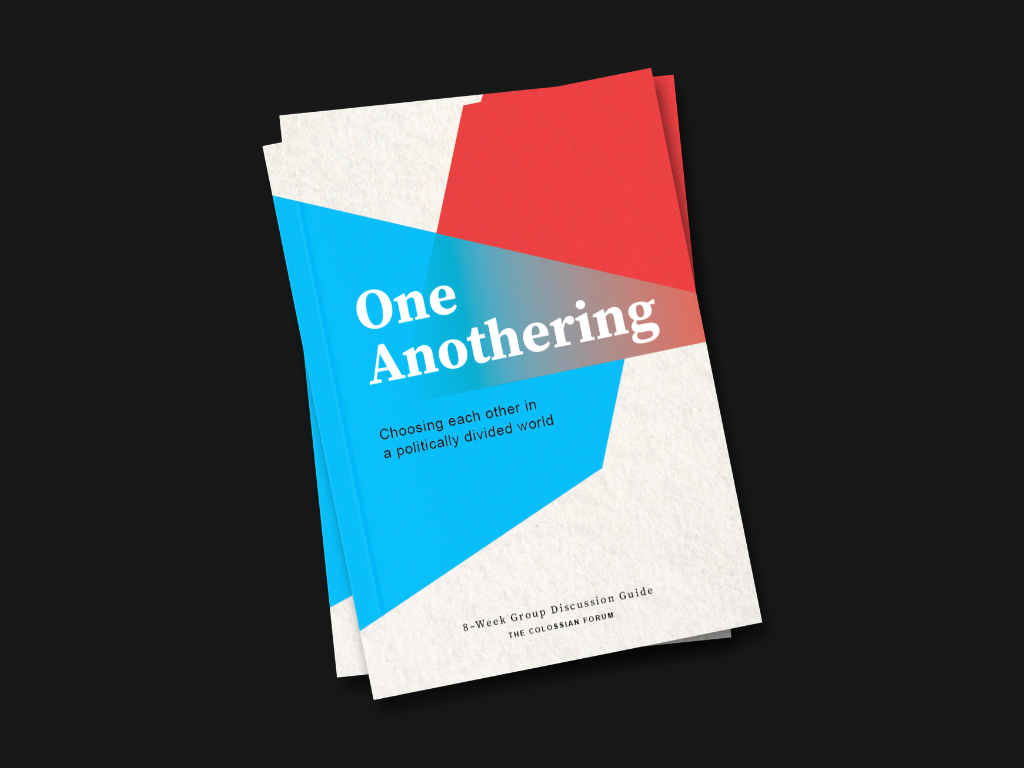
Choosing one another in a politically divided world
It can feel almost impossible to stay connected to people when political disagreement becomes personal, emotional, or divisive.
One Anothering is an eight-chapter book for individuals and small groups who want to learn how to approach political conversations without losing relationships along the way. This isn’t about changing political positions, but learning how to hold others’ beliefs with humility, curiosity, and love in a polarized world.
Insights to help your church make hard decisions
Whether it’s disagreement on anything from politics to building renovations to sexuality to leadership decisions, discernment is essential to life together in the church. On the Practicing Hope podcast, we’re having conversations to help pastors, church leaders, and congregations approach hard decisions with hope.
-
Don’t Let Fear Drive Your Decisions
Have you ever carried a decision that felt heavy? Leadership often puts us in moments where there’s no obvious right answer — just responsibility, consequence, and the hope that we don’t cause harm. In this episode, Tanner Smith is joined by Chase Stancle and Sarah Johnson to explore what it means to discern well under pressure. -
What to Do When Your Community Makes a Decision You Disagree With
Have you ever wished there were a simple formula for knowing when it’s time to move on, especially after your community makes a decision you wouldn’t have chosen? In this episode, Tanner Smith, Chase Rashad Stancle, and Sarah Johnson explore what faithful discernment looks like when you find yourself out of step with your community. -
How to Follow Through on a Hard Decision Without Shrinking Yourself or Burning Bridges
In this episode, Tanner Smith, Chase Rashad Stancle, and Sarah Johnson explore what it looks like to live your decision with humility and courage. Through stories, humor, and practical wisdom, they name common pitfalls like silent quitting, over-functioning, and avoiding grief — and offer a more hopeful path rooted in boundaries, vulnerability, and love.
Conflict brings up a lot of questions. We’re here to help.
How do we pursue Christian unity when we disagree?
Disagreements can make a church feel fragile. A conversation about politics, theology, or ministry quickly becomes personal. People wonder whether the relationship can survive or whether someone has to change their mind before the church can move forward. In a polarized culture, disagreement often feels like the beginning of separation.
The church has always been a community of people with different backgrounds, experiences, and perspectives who are brought together by their shared life in Christ. That common identity gives us a place to begin, even when we see the world differently. Christian unity grows as we continue following Jesus together through our disagreements.
One way we pursue that unity is by choosing curiosity. When someone sees an issue differently, ask a question before offering an answer. Can you help me understand what has shaped the way you see this? Listening creates space to discover the experiences, hopes, and fears behind another person’s convictions, helping us remember that every disagreement involves someone made in God’s image.
Unity also grows through small acts of connection. Share a meal. Pray for one another. Check in after a difficult conversation. Continue serving alongside each other. These ordinary practices strengthen relationships and create the trust needed to have honest conversations with grace and courage.
As you continue walking together, some conversations may lead to repentance or forgiveness. Others may end with sincere disagreement. Some relationships will grow slowly over time. Throughout it all, God continues his work of forming us into people who love more deeply, listen more carefully, and remain rooted in Christ.
Every conversation is an opportunity to take one small step toward another person. As we continue choosing connection, humility, and faithfulness, our churches become places where the reconciling love of Christ can be seen, even in the midst of meaningful differences.
Want to go deeper? One Anothering equips churches and small groups to navigate political differences through practices that foster curiosity, trust, and deeper discipleship.
How do I know when to speak up about a controversial issue and when to stay silent?
Whether it’s a political comment in a Bible study, tension on a ministry team, or something a friend says that doesn’t sit right with you, it can be hard to know what to do next. If you speak up, you may create conflict. If you stay silent, the problem may grow. Discernment begins by slowing down long enough to understand what’s really happening before deciding how to respond.
Begin by bringing the situation before God. Pray for wisdom, honesty, and love, then ask yourself a few simple questions. What am I hoping this conversation will accomplish? What happens if I don’t say anything? Am I responding to a single moment, or have I noticed a pattern? These questions can help you move beyond reacting in the moment and toward responding with greater clarity.
It also helps to separate what you know from what you’re assuming. What did you actually observe? What story are you telling yourself about why it happened? We often fill in the gaps without realizing it. A simple question like, “Can you help me understand what you meant?” or “Can you tell me more about what was happening?” can reveal a fuller story and deepen understanding. Approaching others with curiosity also communicates that you’re seeking to understand them, not simply win an argument.
As you continue discerning, consider what’s at stake. A single comment or difficult interaction may call for patience, curiosity, or another conversation before drawing conclusions. A repeated pattern that harms relationships, diminishes trust, or affects the well-being of others often calls for loving action. Ask yourself whether this is something the other person can meaningfully respond to and whether addressing it could strengthen the relationship or help your community flourish.
Timing matters, too. Some situations require immediate action, especially when someone is in danger or being harmed. Many others benefit from waiting until emotions have settled, seeking wise counsel, or taking time to prepare your words. A thoughtful conversation at the right time often bears more fruit than a hurried one in the heat of the moment.
You won’t handle every conversation perfectly, and that’s okay. As you continue seeking God’s wisdom, he forms you into someone who grows in courage, humility, and love. Over time, you’ll become better equipped to recognize when silence serves your neighbor, when truth needs to be spoken, and how to speak it in ways that strengthen both your relationships and the witness of your church.
Want to go deeper? Explore the Discernment series on our Practicing Hope podcast, where we explore how Christians can seek God’s wisdom, make faithful decisions, and navigate difficult conversations with courage, humility, and grace. If you’re looking for practical ways to put those practices into action with others, One Anothering offers guided conversations that help churches and small groups build trust, deepen understanding, and stay connected through disagreement.
How do I lead my church when political disagreements start hurting relationships?
Political conflict often brings grief, disappointment, fear, and uncertainty. Leaders sometimes feel pressure to move quickly toward solutions or reassure everyone that things are fine. But people are more likely to move forward when they know their experiences have been recognized and taken seriously. Honest leadership helps a church face difficult realities together.
One practical way to do that is through a facilitated listening circle. The goal isn’t to debate issues or reach consensus. It’s to help members understand how their brothers and sisters are experiencing life together in the body of Christ. Good facilitation invites quieter voices into the conversation, prevents a few people from dominating the room, and encourages participants to listen with curiosity before responding. Leaders are not simply gathering opinions. They are helping the church practice the kind of listening that strengthens its capacity to discern God’s leading together.
Listening doesn’t replace leadership. Pastors and church leaders will still need to make difficult decisions. But listening equips leaders to lead with greater wisdom because they better understand the hopes, fears, and convictions of the people they serve. Even when members disagree with an outcome, they are more likely to remain engaged when they know they have been heard with honesty and respect.
Throughout the process, keep returning your congregation to the practices that have always formed the Church: worship, prayer, Scripture, the Lord’s Table, and serving your neighbors. These rhythms remind us that our deepest identity is found in Christ and shape us into people who can tell the truth, extend grace, and remain faithful to one another through disagreement.
Political disagreements are not new to the Church. What distinguishes Christian communities is not the absence of conflict, but the presence of Christ, who continues to reconcile people to God and to one another.
Want to go deeper? One Anothering equips churches with guided practices for leading faithful conversations across difference, cultivating trust, and strengthening relationships in the midst of disagreement. You can also explore the Practicing Hope podcast for conversations on discernment, leadership, and forming communities that reflect the reconciling love of Christ.
How do I ensure every voice is heard during a difficult conversation?
In every church, some people are ready to share their thoughts right away, while others need time to reflect. Left unchecked, a few perspectives can shape the conversation while others never make it into the room. It’s possible to create a process where the whole body has an opportunity to contribute to discernment.
That starts before anyone speaks. Be clear about why you’re gathering and what role participants will play. Are you listening to understand people’s experiences? Gathering input before a decision? Or asking a group to make a decision together? When expectations are clear, people are more likely to engage openly because they understand how their participation fits into the process.
It also helps to separate listening from decision-making. If every conversation feels like a debate that must end with a verdict, people often become defensive or feel pressure to persuade. Instead, create dedicated opportunities to listen first, then communicate how decisions will be made and who is responsible for making them. A simple statement like, “Today we’re here to listen and learn. Decisions will come later,” can change the posture of the entire room.
As you facilitate, pay attention not only to who is speaking but also to whose perspectives haven’t yet been shared. Invite additional voices into the conversation, gently redirect those who are carrying most of it, and remember that people process differently. Some think by talking, while others need time before they know what they want to say. Offering opportunities to respond after the meeting or in writing often uncovers wisdom that would otherwise be missed.
Finally, tell people what happens next. Explain how you’ll use what you’ve heard, who will make the decision, and when the community can expect an update. Not every suggestion will shape the final outcome, but every person deserves to know how their contribution has been honored. Processes marked by honesty, transparency, and respect build trust, even when people don’t all agree.
Healthy conversations don’t simply produce better decisions. They form communities that trust one another enough to keep listening, keep discerning, and keep following Christ together.
Want to practice these habits with others? One Anothering is an eight-week small group experience that helps churches learn how to have difficult conversations through guided discussion, spiritual practices, and practical exercises that cultivate curiosity, deeper listening, and love across differences. You may also enjoy Pastor Jennifer Holmes Curran’s reflection, “What a group of middle-schoolers taught us about listening,” which explores how genuine listening can transform our relationships and our witness.
How do I know if it's time to leave my church after a difficult decision?
Every church eventually makes decisions that some people celebrate and others struggle to accept. Maybe a leadership transition changed the culture. Maybe your church took a public stance on an issue. Maybe a ministry you loved came to an end. If you’ve found yourself wondering whether it’s time to leave, you’re not alone. A better question than Should I stay or should I go? is Where is God calling me, and who am I becoming as I discern?
There are times when staying is an act of faithfulness. Churches are imperfect communities, and disagreement doesn’t necessarily mean it’s time to leave. God often uses difficult seasons to deepen our humility, patience, and love. Sometimes our continued presence is part of how Christ brings healing to a community. Ask yourself: Can I remain here with integrity, and is God inviting me to grow through this season?
There are also times when a church’s direction changes in ways that call for honest discernment. Can you continue to worship, serve, and participate without pretending to be someone you’re not? Can you remain connected without compromising convictions that are central to your calling? If staying requires you to deny who God is forming you to be, it may be time to prayerfully consider whether he is leading you elsewhere.
Whatever you’re discerning, don’t rush to relieve the tension. You don’t have to decide this week. Spend time in prayer. Meet with your pastor or another mature believer. Invite trusted friends to help you notice where you experience God’s presence, where you sense resistance, and what might simply be a reaction to disappointment. Faithful discernment grows over time as we learn to listen to God, to others, and to what the Spirit is doing within us.
Whether God ultimately calls you to stay or to leave, his invitation is the same: follow Christ with courage, humility, and love. The goal isn’t simply finding the right church. It’s becoming the kind of disciple who can faithfully respond to wherever God leads next.
Looking for more guidance? Listen to the Practicing Hope Podcast episodes about discerning your role in a changing church:
Help your church navigate polarization with courage and love
Political and cultural differences can put real strain on church communities. Pastors and church leaders are often left trying to shepherd people across deep disagreements while protecting relationships and keeping their communities rooted in Christ.
Our workshops help churches understand what happens within us when differences become charged and practice ways of staying connected, listening with curiosity, and loving one another across divides.
Some of our most requested workshops include:
- Cultivating Resilience — helping leaders remain calm, clear, and connected under pressure.
- Beholding — discovering hope and faithful next steps in difficult relationships.
- One Anothering — cultivating curiosity and love across political differences.
Whether you’re equipping leaders, planning an adult formation experience, or helping your congregation navigate division, we’d love to help you discern what would serve your church best.

Be encouraged by leaders navigating division with faithfulness
Our email newsletter Hope in Your Inbox comes every other Monday, featuring words of encouragement, practical next steps, and wisdom from pastors and church leaders navigating conflict in their own communities.