
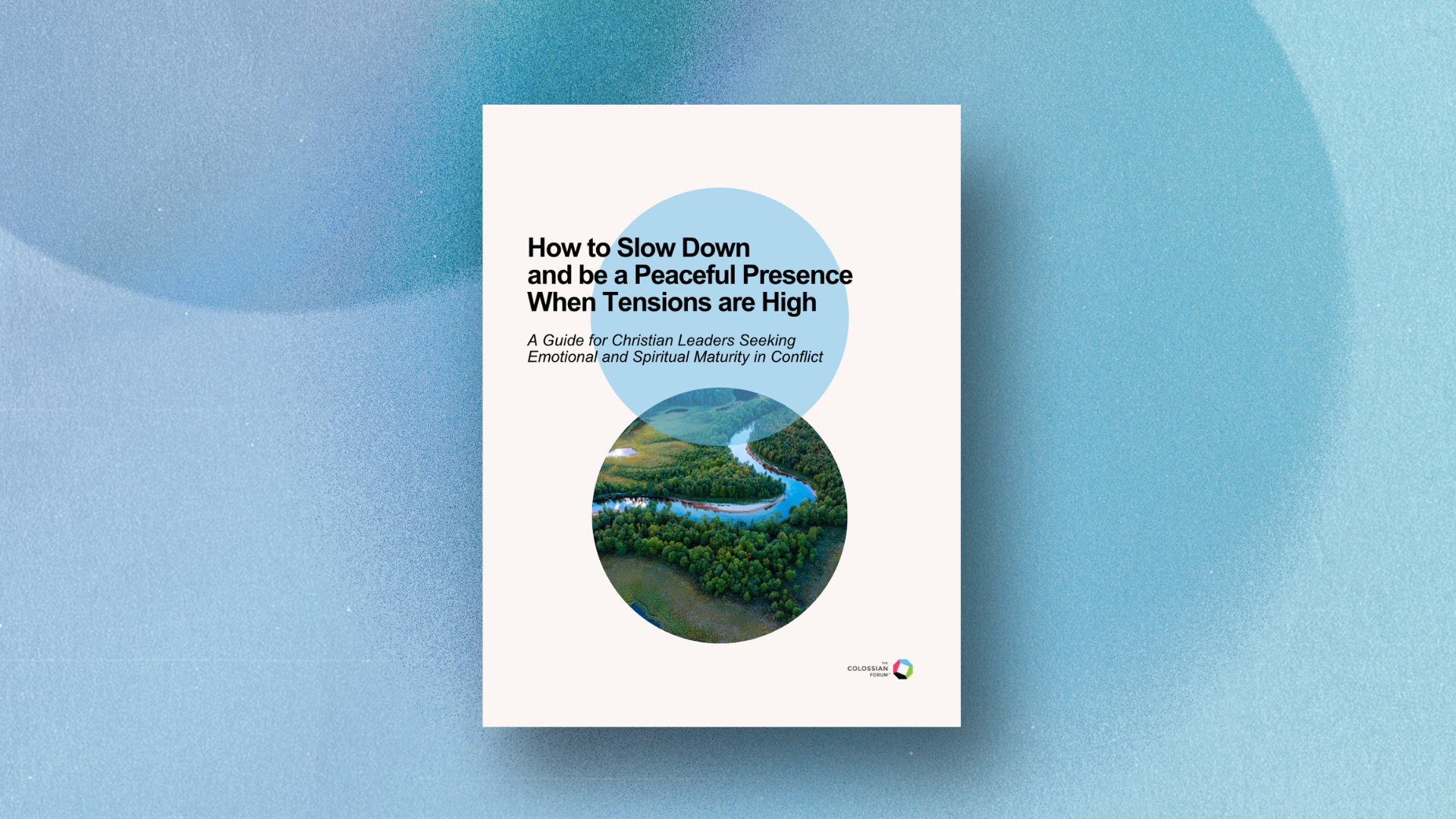
It’s hard to show up like Christ when you’re exhausted
Our lives move fast. And when you’re tired, it’s easy to try to hold everything together or completely avoid conflict.
This guide is an invitation to slow down. To make space to hear from the Holy Spirit and develop Christlike responses to tension in your everyday life.
Inside, you’ll find:
- Four short chapters on how to slow down when conflict hits
- Simple exercises you can follow to calm your body and mind
- Questions that help you name what you’re feeling and why
- Short prayers to help you reset and refocus in stressful moments
When meetings get tense, try asking before answering
When strong emotions drive the conversation, people often stop listening and start protecting themselves instead. This week, practice asking one sincere question before sharing your perspective in a difficult conversation.
A posture of curiosity can help people, including yourself, remain connected and engaged, even when the subject is uncomfortable.
You might ask:
- How are you seeing this situation?
- What feels most important to you here?
- What do you think is making this conversation hard?
Then, really listen. Resist the urge to prepare your response while the other person is talking. You may still need to say something difficult. But leading with questions can lower defensiveness and help others stay present for discernment and collaboration.
This practice is inspired by an article titled “What a group of middle-schoolers taught us about listening” on our blog. Click the link below to read the full article.
Understanding relational triangles in the workplace
This 4-part Practicing Hope podcast series explores the hidden relational dynamics that shape workplace conflict — especially the familiar roles of victim, accuser, and rescuer that teams often fall into under stress. As you listen, you’ll be invited to consider your own patterns, recognize unhealthy dynamics more clearly, and discover more grounded ways of responding to tension and conflict.
-
Why You Keep Getting Pulled in: Understanding Relational Triangles
In this hope-filled episode of Leading in Practice, hosts Tanner Smith and Chase Rashad Stancle explore the hidden dynamics of relational triangles. They share stories from pastoral life, practical strategies to “flatten the triangle,” and ways to discern when you’re moving toward connection or just lowering discomfort. -
Stop Saving Everyone (Even if You’re Good At It)
Have you ever felt the pressure to fix everyone else’s problems? In Part 2 of our Relational Triangles series, hosts Tanner Smith and Chase Rashad Stancle — joined by Sarah Johnson — unpack the “hero/rescuer” role of the Drama Triangle: why anxious systems reward over-functioning and how to shift from rescuer to coach with simple, wise questions.

Encouragement for difficult team dynamics
Subscribe to our newsletter, Hope in Your Inbox, for encouragement, practices, prayers, and honest reflections to help you navigate staff dynamics, difficult conversations, and the relational pressures that shape Christian workplaces with wisdom, compassion, and hope.